Natural light
Using Window Light as Your Main Source
Daylight is free, flattering and completely predictable — once you understand the two hours when it behaves and the two hours when it does not.
In this guide
Which window to use
Direction decides everything with window light. A window that never receives direct sun gives a broad, soft source that barely changes during the day — ideal if you film often and want a repeatable look.
If your window does take direct sun, your useful window narrows to the hours when the sun is off the glass, or you need to diffuse it. Test with your hand in the frame: if it produces a sharp-edged shadow on the wall, the light is currently hard.
- Indirect or north-facing light: soft, stable, easiest to plan around
- Direct sun: strong and directional, needs diffusion or a different hour
- Window behind the subject: creates a bright rim but an unlit face
- Window to the side of the subject: the most flattering starting point
Placing the subject against the light
Position the subject about one step back from the window and slightly off to one side so the light falls across the face rather than straight onto it. This is the same forty-five degree idea as with a lamp, just using a much larger source.
Then decide what to do with the other side of the face. A white wall, a foam board or a light curtain can lift the shadow side just enough to keep detail without flattening the face.
Softening hard daylight
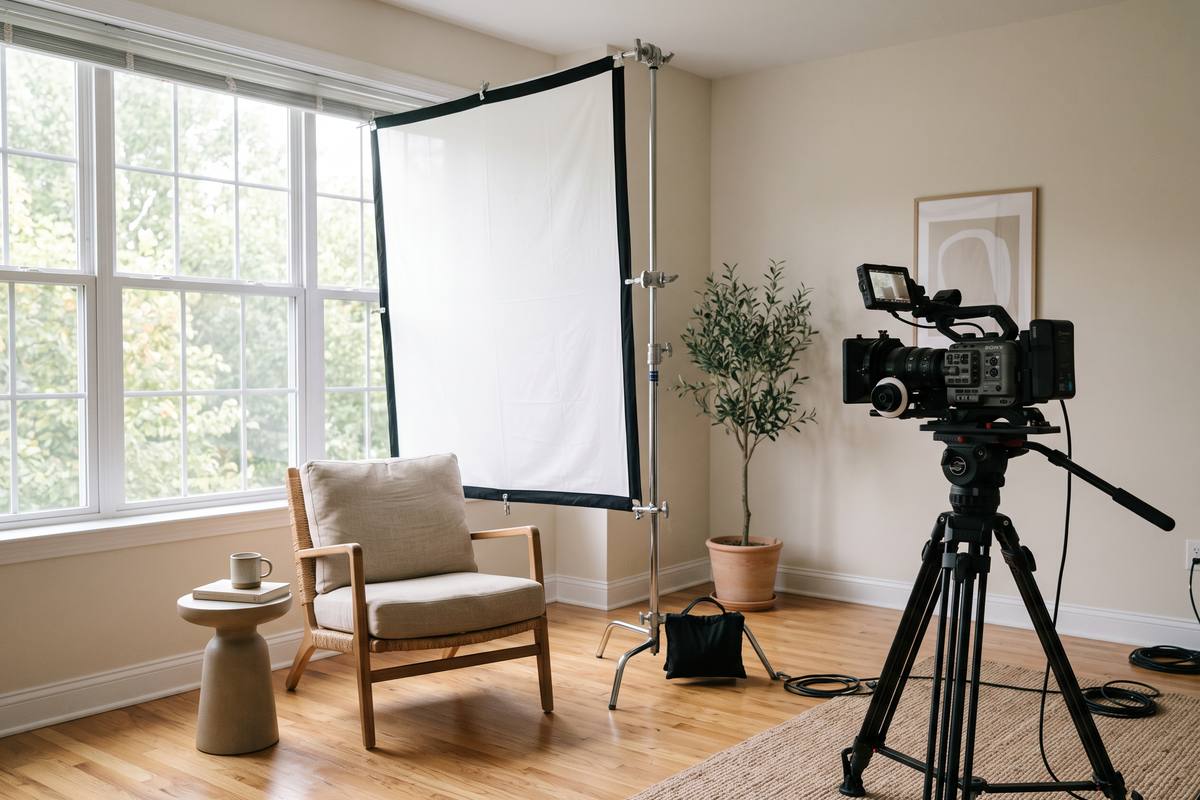
Sheer curtains are the simplest solution and they usually already exist in the room. If the light is still hard, tape a sheet of diffusion or a white shower curtain across part of the window — but leave the rest uncovered so you still have brightness to work with.
Another option is to move the whole setup deeper into the room. Distance from the window reduces contrast and makes the light softer and dimmer, which is often faster than hanging anything.
Staying consistent between takes
Shoot the shots you need from a given setup back to back rather than returning to them later when the light has moved. If a take must be repeated at a different hour, set the camera's white balance manually to a fixed value so the two clips match in the edit.
Write the time of day and the camera settings in your notes next to the shot list. When a clip looks different from the rest, those two pieces of information usually explain why.
Key takeaways
- Choose an indirect window for a repeatable, soft look.
- Place the subject one step back and slightly off-axis to the window.
- Soften direct sun with a sheer curtain or by shooting deeper into the room.
- Film all shots from one setup together and lock white balance for repeats.
BrightFrame Media editorial teamIllustrated and tested in ordinary apartments, not studios. Every setup described here was photographed in a room smaller than most people expect.
Is window light enough for indoor filming?
In most rooms during the day, yes, if the subject is close to the window and the camera is positioned to see the lit side of the face.
How do I stop the background from blowing out?
Either move the subject so the brightest part of the window is not in frame, or accept the extra brightness and protect the face by locking exposure while the subject stands in position.
Can I film in the evening with window light?
Only if the room has strong artificial lighting. In the evening the dominant colour shifts to warm indoor bulbs, so plan for that or switch to a lamp-based setup.