Equipment choices
Softbox or LED Panel: Choosing Your Setup
Both fixtures can produce good footage. The difference is how much control you want and how much space you are willing to give up.
In this guide
The one difference that matters
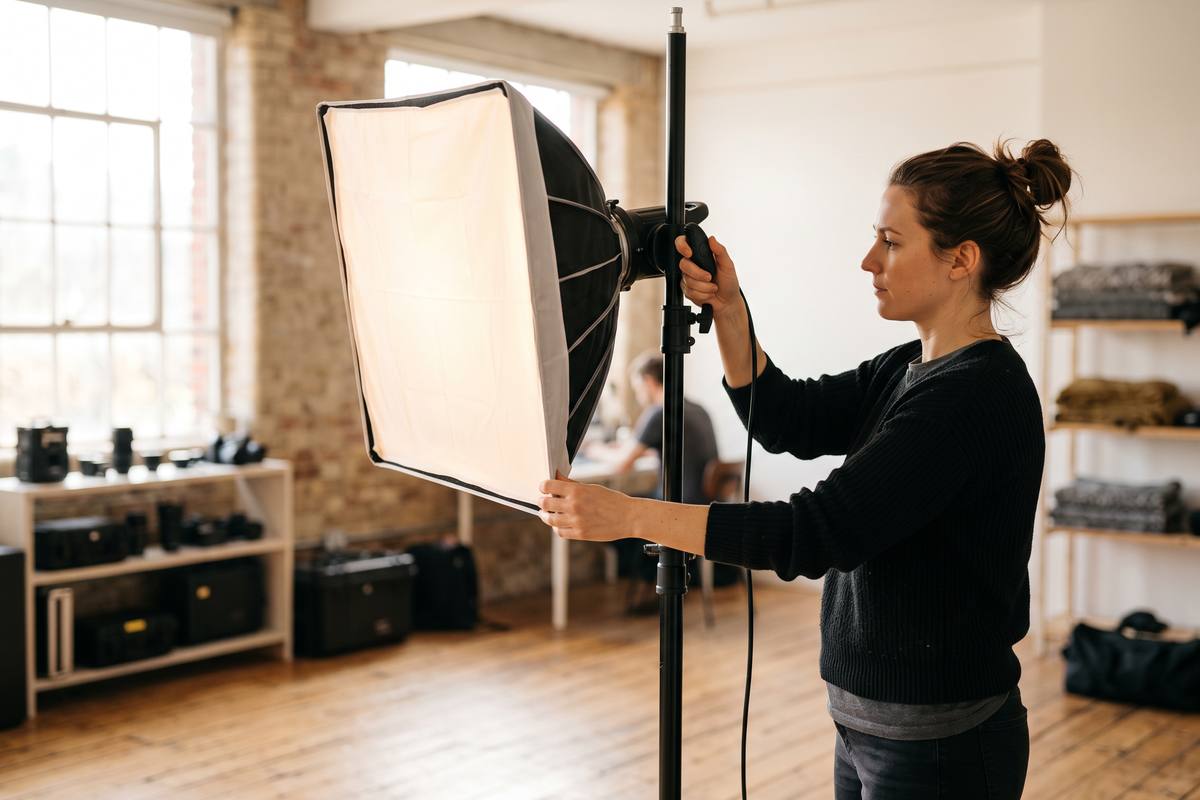
A softbox is a large, translucent front on a light. Its size is its entire advantage: large sources produce soft shadows, and soft shadows are what make faces and objects look considered on camera.
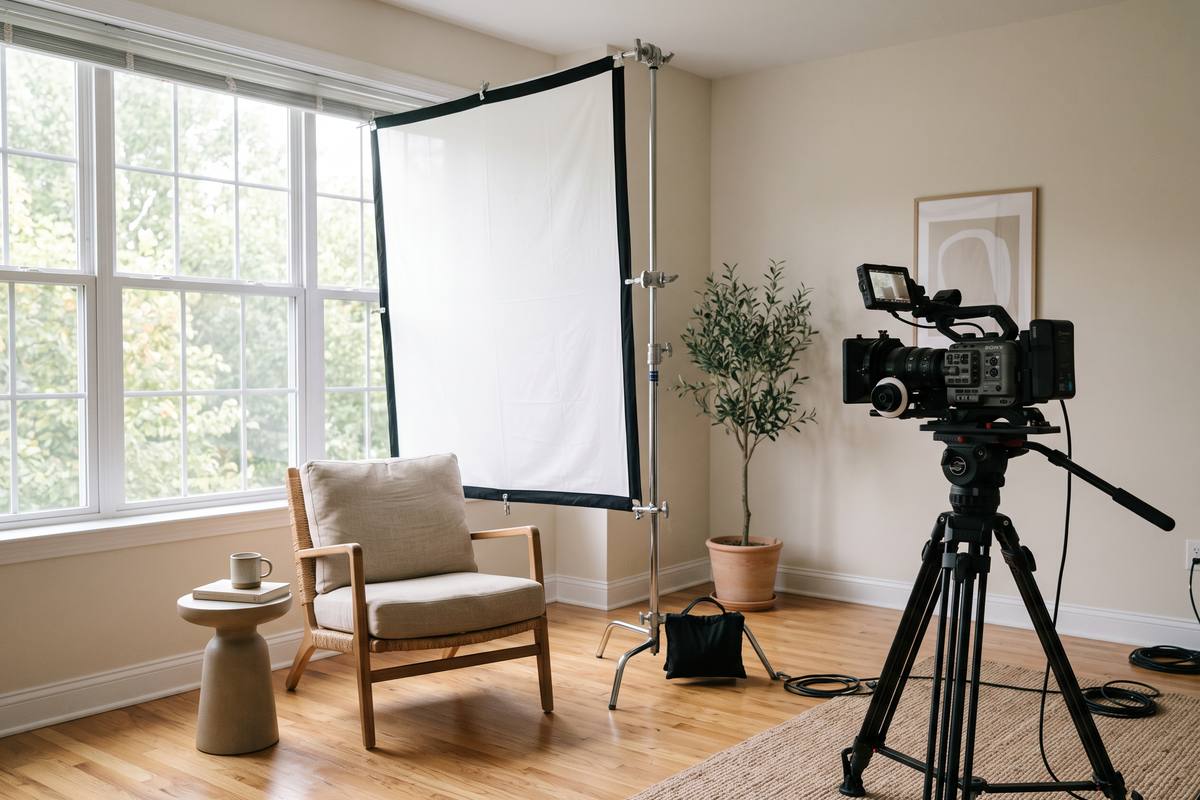
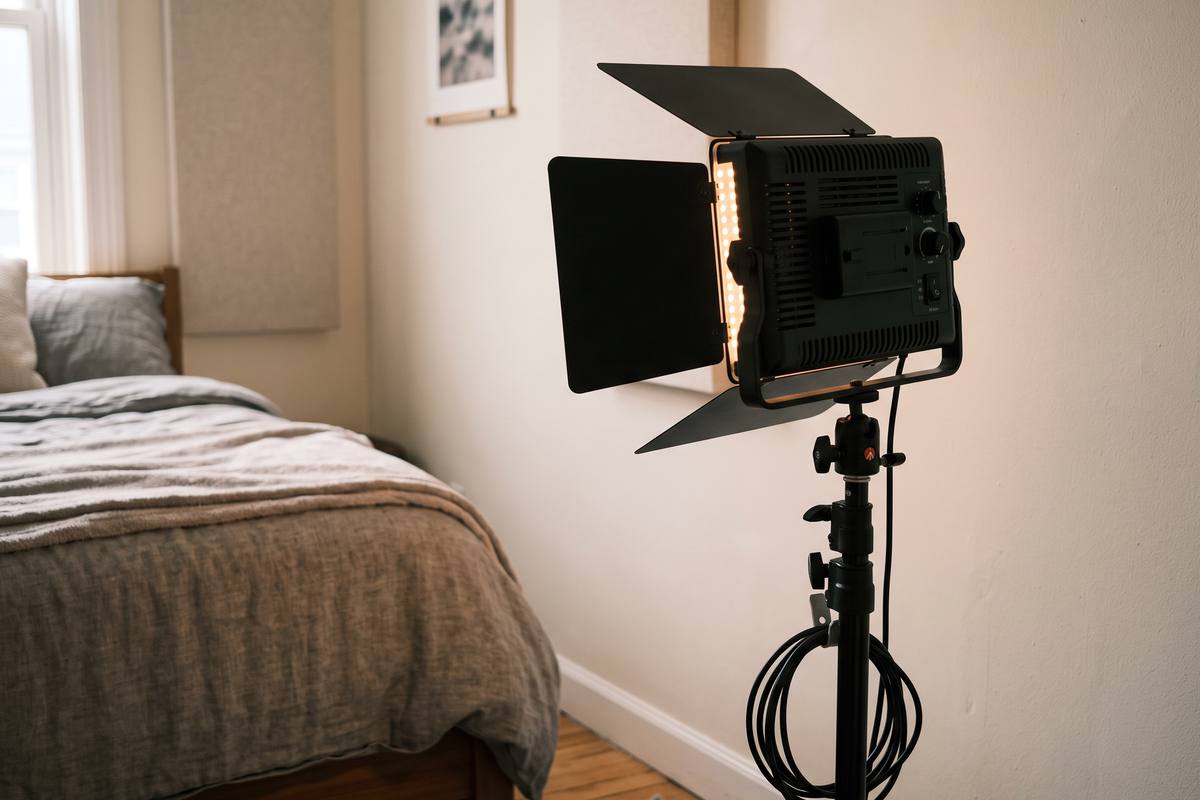
An LED panel is smaller, brighter for its size and far easier to control. It can change colour temperature, dim smoothly and be mounted almost anywhere. It does not, however, become a large source unless you put diffusion in front of it.
Comparing them honestly
If your main subject is a person talking to camera in one fixed position, a softbox wins on image quality per dollar. If your work moves around — a product on a table today, an interview tomorrow, a location shoot next week — the panel's flexibility usually matters more.
Footprint is the deciding factor in small apartments. A softbox on a stand needs clearance and a wide footprint for the stand; a panel can sit on a shelf, a table edge or a light stand in a corner, with diffusion clipped to the front.
- Softbox: softest result, slowest to reposition, needs the most space
- Panel with diffusion: good softness, fast to change, compact
- Panel without diffusion: hard light, excellent for texture and product detail
- Two small panels: flexible, but you must manage two reflections on glossy subjects
What to buy first
Start with the fixture that solves your most common problem. If almost every video is a person at a desk in the same spot, buy one soft source and learn it completely: height, angle, distance and power settings, recorded so you can repeat them.
If the work varies, buy one adjustable panel with a diffusion sheet and a stand. Add a second panel later only when you know which shot needs it, because two lights double the setup time and the possibility of crossed shadows.
Keeping the look repeatable
Once you are happy with a setup, photograph it from two angles and write down the settings. That record turns a lucky good video into a repeatable one, and it makes the equipment choice almost irrelevant.
Test any change one variable at a time: move the light or change its power, but not both. This is slow for one afternoon and fast for every shoot after it.
Key takeaways
- Large sources give soft light; that is the entire softbox advantage.
- Panels win on control, colour changes and small spaces.
- Choose according to your most common shot, not the most impressive one.
- Record the height, angle, distance and power of every setup you like.
BrightFrame Media editorial teamIllustrated and tested in ordinary apartments, not studios. Every setup described here was photographed in a room smaller than most people expect.
Do I need a diffuser on an LED panel?
For faces, yes. A panel straight on the subject produces sharp shadows; a diffusion sheet in front turns it into a workable soft source.
Are bi-colour panels worth it?
Yes if you film in mixed indoor light often, because matching the room's colour is faster than removing it. Fixed daylight panels are cheaper and fine if you control the room.
What about battery-powered panels?
Useful for locations without power. Check the run time at the brightness you actually use; quoted figures are usually measured at low output.